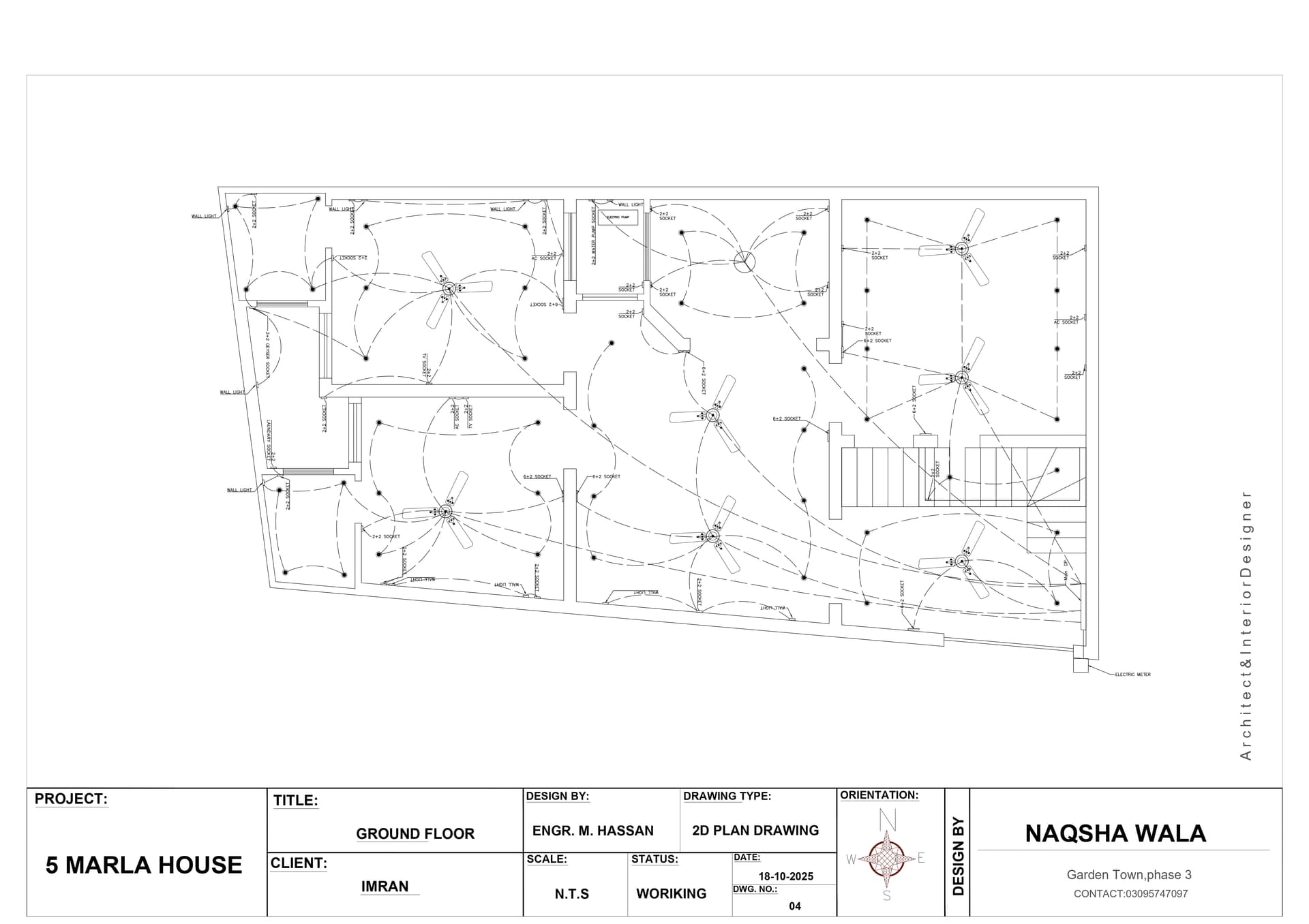
5 Marla House Electrical Plan SLD Diagram for Irregular Plot
5-marla-house-electrical-plansld-diagram-houseirregular-plot-electrical-designhouse-wiring-plan-pakistanelectrical-layout-5-marlatechnical-electrical-drawinghouse-electric-plan-designswitch-socket-layout-planresidential-wiring-diagramnaqsha-builder-gujranwalahouse-wiring-design-pakistansmall-house-electrical-planload-distribution-house-wiringelectrical-plan-irregular-walls2d-electrical-working-drawing
5 Marla House Electrical Plan SLD Diagram for Irregular Plot
This project presents a technical electrical plan for a 5 marla house designed on an irregular plot where the walls are not straight and the room geometry is not standard. It is a ground floor 2D electrical drawing prepared as a working document, and the layout clearly shows that this is not a simple rectangular house plan. The drawing includes a full electrical arrangement with light points, fan points, switch locations, socket placements, and wiring connections distributed according to the actual shape of the house. According to the file, this is a ground floor design prepared by Engr. M. Hassan for client Imran, and the drawing status is marked as working.
The main purpose of this electrical plan is to make sure that even though the plot is irregular, the electrical system still works in a smart, practical, and safe way. In many houses, especially on small plots like 5 marla, the biggest challenge is not only space, but also the shape of the building. When walls are angled or uneven, a normal electrical layout does not fit properly. Switchboards may end up in awkward positions, lighting may become unbalanced, and wiring may become difficult to manage. This project solves that problem by creating a layout that follows the real structure of the house instead of forcing a standard design into a non-standard space.
One of the most useful things about this drawing is that it shows how electrical planning can be adapted to difficult architecture. The plan is made for a house where the walls are not parallel and the overall shape is irregular, so every light point and switch point must be placed carefully. This is why the drawing looks technical and detailed. The dashed lines in the layout show the electrical connections and routing logic, helping electricians understand how power should flow from one point to another. This kind of documentation is important because it reduces confusion on site and makes installation smoother.
In a 5 marla house, every inch of space matters. That is why the placement of lights, fans, and sockets must be done with a proper strategy. If the plan is not carefully prepared, the result can feel cramped, inconvenient, or visually unbalanced. In this design, the electrical points are distributed in a way that supports daily living. Rooms receive proper ceiling fan placement, usable light coverage, and accessible switch positions. The socket arrangement also appears planned for practical use, which is very important for modern homes where people need connections for appliances, chargers, TVs, and other electrical devices.
This project is especially valuable because it reflects the reality of custom house design in Pakistan. Not every plot comes in a clean square or rectangle. Many plots have slanted sides, uneven boundaries, or changes in wall alignment, and that creates a real challenge for both architectural and electrical planning. A standard electrical drawing cannot solve these issues properly. A custom SLD-style electrical plan, however, can adjust to the exact conditions of the building. That is what makes this drawing technically strong and professionally useful.
The design also shows the importance of combining architecture and electrical engineering. An electrical plan should never be treated as a separate afterthought. It must be aligned with the room layout, furniture placement, and future usage of the space. For example, a fan should be centered in the room for comfort, not just placed wherever there is wall space. Likewise, switchboards should be placed near the entrance or in easy-to-reach positions so that users can control lighting without inconvenience. In this layout, the arrangement appears to follow a practical logic rather than a random distribution of points. That is exactly what a professional house electrical plan should do.
Another strong point of this drawing is the technical clarity it provides for execution. A good electrical plan must be useful not just for presentation, but also for site work. The electrician should be able to read the drawing and understand where each wire, switch, light, fan, and socket belongs. This plan serves that purpose very well. The working drawing format indicates that it is meant for actual implementation, which makes it useful for construction teams, contractors, and site supervisors. In real projects, clear working drawings save time, reduce mistakes, and help avoid costly rework.
For homeowners, this type of design brings long-term benefits. A properly planned electrical system improves safety, comfort, and efficiency. It can also make maintenance easier in the future. When electrical lines are organized logically, it becomes easier to identify faults, add new connections, or modify the system later. In a house with irregular geometry, poor wiring can quickly become messy and difficult to troubleshoot. A well-planned SLD diagram prevents that problem by creating an organized and understandable path for electrical distribution.
This project can also be seen as a good example of modern residential planning. Today, people expect more from their homes. They want better lighting, better fan placement, proper socket distribution, and a system that can handle daily electrical needs without trouble. A basic layout is no longer enough. Families use more devices, more appliances, and more electrical accessories than before, so the house design must support these demands. This 5 marla electrical plan addresses those expectations in a professional way.
Another reason this plan stands out is its adaptability. Because the plot is irregular, the design must be flexible enough to suit the actual structure on the ground. That means the electrical system cannot rely on symmetry alone. It has to work with the walls as they are. This is where experience matters. A designer must think about usability, construction constraints, aesthetic balance, and technical execution all at once. The drawing in this project reflects that kind of thoughtful planning.
If you are looking at this project from an SEO and portfolio perspective, it is also highly valuable because it represents a niche skill set. Many people search online for things like 5 marla house electrical plan, SLD diagram for house, electrical layout for irregular plot, house wiring drawing, and technical electrical plan for small house. This project fits those search intents very well because it is not a generic house plan. It is a specific, practical, and technical electrical solution for a difficult plot shape. That makes it relevant, useful, and easy to position on a professional website like nakshabuilder.com.
From a presentation point of view, this project also communicates professionalism. A properly prepared electrical drawing builds trust with clients because it shows that the design has been handled seriously. It tells the client that the home is not being designed casually, but with attention to detail and future usability. For a small house, that kind of planning can make a major difference in the comfort of the final built space. When the plan is done right from the start, the house performs better for many years.
Overall, this 5 marla house electrical plan SLD diagram for an irregular plot is a strong example of technical residential design. It combines practical wiring logic, thoughtful point placement, and site-friendly execution in one professional drawing. The irregular shape of the plot makes the work more challenging, but it also makes the project more valuable because it shows real design problem-solving. This is not just an ordinary electrical layout; it is a custom working plan created to handle a unique house shape with precision and clarity. As a result, it stands as a useful reference for homeowners, builders, electricians, and anyone looking for a professional electrical design solution for a 5 marla home.
Published: 4/16/2026